SECOND CHANCE: A PATHWAY TO RECLAIMING MISSED OPPORTUNITIES IN EDUCATION
 SECOND CHANCE: A PATHWAY TO RECLAIMING MISSED OPPORTUNITIES IN EDUCATION
By Sani Umar
“Second chance” refers to taking another shot at what one has missed, or making use of an opportunity to correct mistakes or shortcomings resulting from negligence, human error, or unforeseen circumstances. Whenever such an opportunity presents itself, it demands steadfastness and determination to recover what may have slipped through one’s fingers.
Many times, those given a second chance make the most of it, while others approach it with a lackadaisical attitude, failing to recognize its value.
People who aspire to improve their lives often hope for opportunities that will allow them to correct past mistakes. These are individuals who understand the purpose of life and are determined to succeed like other accomplished members of society.
It is against this backdrop that the Sokoto State Government, through the Sokoto State Universal Basic Education Board (SUBEB), introduced the “Second Chance” initiative for individuals who were unable to complete their early education and had dropped out of school.
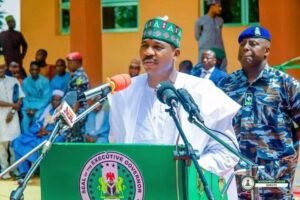
This initiative forms part of the renewed efforts of the Sokoto State Governor, Ahmed Aliyu, to improve education and place the state on a path of sustained growth and development.
Sokoto State, like many other northern states in Nigeria, is grappling with the challenge of out-of-school children. However, deliberate efforts are being made through policies and programmes aimed at returning these children to the classroom.
The “Second Chance” programme is designed to target young persons, particularly married and unmarried girls, who dropped out of school due to cultural or social factors. Special schools are being planned specifically for them, to receive formal education and vocational training, while boys will be integrated into existing schools across the state.
As part of the strategy to ensure the success of the programme, the Basic Education Board, under the chairmanship of Alhaji Umar Nagwari Tambuwal, has set up a committee that embarked on a tour of states such as Kebbi to understudy how similar schools operate, assess the effectiveness of their curricula, and evaluate their overall impact.
Beyond access, the success of the “Second Chance” initiative will largely depend on the quality of learning delivered. It is essential that the curriculum is not only flexible but also tailored to meet the unique needs of returning learners, many of whom may have been out of school for years. Incorporating vocational skills, digital literacy, and life skills alongside basic education will ensure that beneficiaries are not only educated but also empowered to become productive members of society.
Equally important is community engagement. For such a programme to thrive, there must be sustained awareness and sensitization at the grassroots level. Traditional leaders, religious institutions, and community-based organizations all have a critical role to play in encouraging enrollment and addressing cultural barriers that may have contributed to school dropouts in the first place.
Furthermore, monitoring and evaluation mechanisms must be put in place to track progress and measure outcomes. Data-driven assessments will help policymakers identify gaps, refine strategies, and ensure that resources are effectively utilized. Transparency and accountability in the implementation process will also build public trust and encourage wider participation.
In addition, providing incentives such as scholarships, learning materials, and possibly stipends could serve as a strong motivation for participants, especially those from disadvantaged backgrounds. Supporting learners in this way reduces the economic pressures that often force them to abandon education prematurely.
Ultimately, the “Second Chance” programme is more than just an educational intervention, it is a social re-engineering effort aimed at restoring hope, dignity, and opportunity. If properly implemented and sustained, it has the potential to significantly reduce the number of out-of-school individuals and contribute meaningfully to the long-term socio-economic development of Sokoto State.