NIGERIA’S POLITICS OF CONFORMISM
NIGERIA’S POLITICS OF CONFORMISM
By Sani Umar
Since the return of the country to a multi-party democratic system in 1999, after years of military rule, elections have been held and won by candidates of different political parties. Nigerians trooped out in large numbers with hope and enthusiasm, believing that democracy would usher in accountability, justice, development, and freedom of expression. For many citizens, the end of military dictatorship marked the beginning of a new era where leaders would emerge through the will of the people rather than the barrel of the gun.
These successful candidates were elected by the people to represent them as members of the State and National Assemblies. Governors and Presidents have also emerged through electoral processes that, despite imperfections, gave citizens a sense of participation in governance. What initially began as a democratic experiment gradually blossomed into a political culture that attracted people from different backgrounds and interests. Politics became the new route to prominence, influence, and power.
However, over the years, many Nigerians have become increasingly disillusioned with the country’s democratic experience. What was once celebrated as government of the people has, in the eyes of many citizens, become a system dominated by political opportunists, moneybags, and power brokers who see politics not as service, but as investment. Elections are now often viewed less as contests of ideas and competence, and more as battles of financial strength and political manipulation.
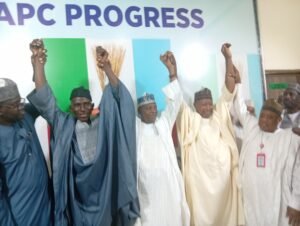
The dream of a people-oriented democracy has steadily given way to a politics of conformism, where loyalty to powerful interests is rewarded more than integrity, competence, or ideological conviction. Many politicians simply align themselves with the prevailing centres of power, abandoning principles and public interest for personal survival and political convenience. Defections from one political party to another have become common, not because of ideological differences, but because of access to power and resources.
One of the greatest setbacks to Nigeria’s democracy is the near absence of clear political manifestos and ideological direction among political parties. In many established democracies, parties are distinguished by policies and principles that guide governance.
In Nigeria, however, parties often appear indistinguishable from one another. Politicians easily move from one party to another without having to explain any major differences in beliefs or programmes. This has weakened democratic accountability and reduced politics to mere competition for power.
Closely related to this is the lack of internal democracy within political parties. Party primaries are frequently manipulated to favour preferred candidates imposed by influential individuals. Aspirants with credibility, competence, and grassroots support are often sidelined because they lack financial strength or powerful political connections. The voices of ordinary party members are suppressed, while decisions are made by a few individuals behind closed doors.
The influence of so called political godfathers has further complicated the democratic process. These powerful individuals often determine who gets nominated, elected, or politically recognised. Their influence extends beyond elections into governance itself, where elected officials sometimes become more accountable to their sponsors than to the electorate. As a result, governance becomes transactional, and public offices are treated as rewards for loyalty rather than responsibilities for public service.
This unhealthy political culture has made it difficult for capable and honest individuals to emerge as leaders. Many Nigerians with genuine intentions are discouraged from participating in politics because they cannot compete with entrenched interests backed by enormous financial resources. Consequently, the majority of citizens, many of whom are trapped in poverty and economic hardship, remain politically marginalized and underrepresented.
Perhaps the saddest irony of Nigeria’s democracy is that many of those who fought courageously for democratic rule now express disappointment over the state of the nation. During the dark years of military dictatorship, pro-democracy activists, journalists, students, labour leaders, and civil society groups risked everything to challenge authoritarian rule. Many endured imprisonment, harassment, torture, and exile. Others paid the supreme price in the struggle for freedom and democratic governance.
The media, in particular, played a heroic role during that period. Newspapers and magazines critical of military regimes were shut down, while journalists were hunted and detained. Yet the press refused to surrender. Determined to keep the flame of resistance alive, journalists resorted to what became known as guerrilla publishing- an underground method of publishing and distributing newspapers secretly to evade state repression. It was a dangerous undertaking, but one driven by patriotism and belief in a better Nigeria.
Today, many of those veterans of the democratic struggle lament that the current democratic order falls far short of their expectations. Their common refrain “this is not what we bargained for”, reflects the frustration of millions of Nigerians who expected democracy to improve their lives. Instead, many citizens continue to grapple with poverty, unemployment, insecurity, corruption, and poor governance despite over two decades of uninterrupted civilian rule.
Yet, despite its imperfections, democracy remains better than military dictatorship. The challenge, therefore, is not to abandon democracy, but to deepen and reform it. Nigeria must build strong institutions capable of resisting manipulation by powerful interests.
Political parties must embrace internal democracy and develop clear ideological visions. Elections must reflect the genuine will of the people, while public office holders must understand that leadership is a trust, not a business venture.
Above all, citizens themselves must refuse to normalize mediocrity, corruption, and political conformity. Democracy can only thrive when the people remain vigilant and demand accountability from those in power.
The future of Nigeria’s democracy depends not only on politicians, but also on the courage of citizens to defend democratic values and insist on leadership driven by service, competence, and integrity rather than greed and opportunism.