
ADVANCING UNIVERSAL HEALTH COVERAGE IN SOKOTO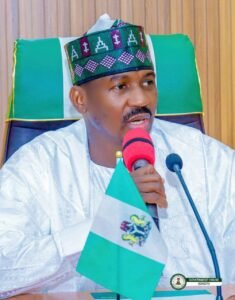
By Sani Umar
Across many parts of Nigeria, the pursuit of accessible and affordable healthcare remains a defining challenge, particularly in states where rural populations face limited access to skilled medical personnel and modern facilities.
In Sokoto State, this reality has underscored the urgent need for deliberate reforms capable of strengthening the health system and improving outcomes, especially for vulnerable groups such as women and children.
It is against this backdrop that Governor Ahmed Aliyu has reaffirmed his administration’s firm commitment to transforming the healthcare landscape through strategic, people-centered policies aimed at achieving universal health coverage.
His renewed pledge came at the 8th Sokoto State Council on Health Meeting, where he outlined a comprehensive vision anchored on accessibility, affordability, and sustainability of healthcare services for all citizens.
At the heart of this vision is a clear recognition of existing healthcare challenges, particularly in maternal and child health. The Governor acknowledged the urgency of improving key health indicators and emphasized the deployment of targeted interventions designed to deliver measurable outcomes.
Accordingly, his administration’s approach reflects not only awareness of the gaps but also a determination to close them through deliberate and inclusive reforms.
A major highlight of the Governor’s strategy is the introduction of a two-year mandatory rural posting policy for nurses and midwives. This initiative is designed to bridge the longstanding disparity in healthcare delivery between urban centres and rural communities.
By ensuring that qualified health professionals serve in underserved areas, the policy directly tackles the shortage of skilled personnel where they are needed most. To reinforce this effort, the government has introduced a 10 percent rural allowance, a practical incentive aimed at boosting morale, encouraging retention, and enhancing service delivery in hard to reach locations.
Beyond human resources, the administration is making significant investments in healthcare infrastructure. The ongoing rehabilitation of 15 general hospitals and 160 primary healthcare centres underscores a large-scale commitment to modernising facilities and improving the quality of care. These projects are expected to expand access to functional and well-equipped medical centres, ultimately bringing healthcare closer to the people.
Complementing these infrastructural upgrades is an aggressive recruitment drive. The employment of over 1,400 nurses and midwives, alongside an additional 2,400 healthcare personnel dedicated to primary healthcare services, signals a decisive move to strengthen the system at its foundation. This expansion of the workforce is critical to building a resilient healthcare structure capable of meeting the growing demands of the population.
Financial commitment has also been a cornerstone of the administration’s strategy. By providing over ₦300 million in counterpart funding to development partners, the government is accelerating critical health interventions and reinforcing collaborative efforts toward universal health coverage. This investment reflects a broader understanding that sustainable healthcare reform requires both local commitment and strategic partnerships.
Governor Aliyu’s healthcare agenda is deeply embedded within his broader 9-Point Agenda, where the health sector occupies a central role. His administration continues to prioritise the revitalisation of primary healthcare, expansion of medical infrastructure, and continuous training of healthcare personnel.
Equally important is the emphasis on collaboration, bringing together government institutions, development partners, health professionals, and community stakeholders to ensure that reforms translate into real impact.
The commissioner for Health, Dr Faruku Umar Abubakar, who is driving these reforms described the council meeting as a vital platform for assessing progress and refining strategies. He highlighted ongoing reforms and innovative programmes that are strengthening service delivery and aligning the state’s health policies with the Governor’s vision.
Ultimately, the direction set by the Aliyu administration reflects a holistic and forward looking approach, one that prioritises the wellbeing of citizens while laying the foundation for long-term socio-economic growth. With sustained investment, strategic reforms, and inclusive collaboration, Sokoto State is steadily positioning itself on the path toward a more efficient, equitable, and responsive healthcare system.
