RESTORING LIFE THROUGH WATER: SOKOTO’S JOURNEY FROM SCARCITY TO SUSTAINABILITY
RESTORING LIFE THROUGH WATER: SOKOTO’S JOURNEY FROM SCARCITY TO SUSTAINABILITY
By Sani Umar
Water is the very essence of life. From the earliest forms of existence to the complexities of modern civilization, access to clean and safe water has remained fundamental to human survival. Every cell in the human body depends on water to function properly, supporting digestion, regulating temperature, and sustaining overall health. Without it, life as we know it would cease to exist.
Beyond human needs, water is equally indispensable to animals and plants. Livestock rely on it for survival and productivity, while crops depend on it for growth and yield. In agriculture-based societies, especially across northern Nigeria, water is not merely a resource, it is the backbone of food security and rural livelihoods. The absence of reliable water sources often translates directly into hunger, poverty, and displacement.
Water also plays a critical role in environmental balance and public health. Clean water prevents the spread of diseases, supports sanitation, and ensures dignified living conditions. Conversely, inadequate water supply leads to outbreaks of waterborne illnesses, strains healthcare systems, and diminishes quality of life. It is within this broader context that the significance of sustainable water infrastructure becomes unmistakably clear.
It was against this backdrop that Governor Ahmed Aliyu assumed office in Sokoto State in May 2023, inheriting what could best be described as an intractable water crisis. The situation on ground was dire. Decades old infrastructure had collapsed under the weight of neglect, vandalism, and lack of maintenance. Water works that once served the metropolis had become largely non-functional, reduced to relics of a system that had long ceased to deliver.
The Sokoto Water Works, a facility over 40 years old, was practically moribund. Critical machines for water treatment and distribution had either broken down or been stripped away. Large transmission pipes installed decades earlier were either damaged or completely removed. The result was a city where dry taps had become the norm, forcing residents to rely on unsafe and expensive alternative sources.
Governor Aliyu’s early response underscored both urgency and intent. His first official visit after inauguration was to the State Water Board, a symbolic and strategic move that revealed the priority his administration placed on addressing the crisis. However, as interventions began, it became evident that the scale of decay was far deeper than initially anticipated. What appeared to be a technical challenge soon revealed itself as a structural collapse requiring comprehensive rebuilding.
The administration’s efforts, as reflected in recent developments, show a deliberate and multi-layered strategy. One of the most significant steps has been the allocation of N6 billion to revamp the aging Sokoto Water Works. This investment is not merely about repairs; it represents a systemic overhaul aimed at restoring functionality to a critical public utility that had long been abandoned.
Complementing this is the expansion of alternative water sources. The completion and energizing of 31 solar-powered boreholes across Sokoto metropolis and its environs signal a pragmatic response to Nigeria’s persistent electricity challenges. By reducing reliance on the erratic power supply from the Kaduna Electricity Distribution Company (KAEDCO), the government is ensuring more consistent water availability while embracing sustainable energy solutions.
In addition, the installation of a 4.2-megawatt solar power project marks a transformative shift in the state’s water infrastructure. With components such as lithium batteries, inverters, and over 10,000 solar panels, the initiative is designed to provide uninterrupted power to water intake, treatment, and distribution systems. This approach directly addresses one of the core bottlenecks that historically crippled water supply in the state, energy instability.
Security, often an overlooked aspect of public utilities, has also been integrated into the reform strategy. By engaging the services of Jedo Security Firm to safeguard water facilities, the government is taking proactive steps to prevent vandalism and ensure the longevity of its investments.
Beyond immediate interventions, the administration has demonstrated a forward looking commitment through the revival of abandoned water schemes. Initially confronted with widespread deterioration, including vandalized equipment and obsolete pipelines, the government returned to the drawing board and opted for a more comprehensive solution. The decision to rehabilitate six major water schemes at a cost of N14.1 billion reflects a recognition that piecemeal fixes would not suffice.
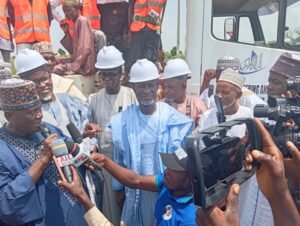
These schemes, located at Old Airport, Tamaje, Mana, Runji Sambo, Gagi, and Ruggar Liman, are expected to deliver a combined 40 million gallons of water per day upon full completion. Early successes, particularly at the Old Airport and Tamaje sites, have already begun to ease the burden on residents. The commissioning of these projects, attended by prominent governors, not only validates the initiative but also highlights its regional significance.
The broader narrative here is one of resilience and recalibration. Governor Ahmed Aliyu’s administration entered office with a clear promise under its 9-point smart agenda to tackle water scarcity. While initial progress provided some relief, the discovery of deeper systemic failures required a shift in strategy, from quick fixes to long-term infrastructure renewal.
In many ways, the unfolding efforts illustrate the complexity of governance in sectors long plagued by neglect. Restoring water supply is not simply about turning taps back on, it involves rebuilding institutions, securing infrastructure, ensuring sustainable energy, and maintaining accountability. The Sokoto experience demonstrates how deeply intertwined these elements are.
As the state moves closer to achieving round-the-clock water supply, the impact on public health, economic activity, and social stability is expected to be profound. Access to clean water will reduce disease burden, support small-scale enterprises, and restore dignity to households that have endured years of scarcity.
Ultimately, the journey from crisis to recovery in Sokoto’s water sector is still ongoing. Yet, the scale and direction of current interventions suggest a decisive break from the past. If sustained, these efforts could redefine water access in the state and serve as a model for addressing similar challenges elsewhere.