
COMMUNIQUÉ ISSUED AT THE END OF THE NIGERIA UNION OF JOURNALISTS NATIONAL SECURITY SUMMIT IN ABUJA IN COLLABORATION WITH THE DEPARTMENT OF STATE SERVICE 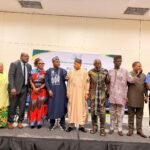
By Bashir Rabe Mani in Sokoto
_PREAMBLE_
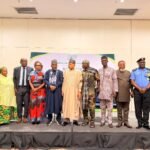
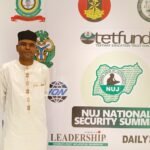
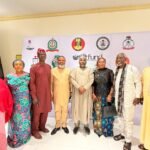
The National Security Summit on the theme “Media and Security Agencies as Partners in Nation Building” was held on 18th and 19th June 2026 in Abuja. The summit was organised by the Nigeria Union of Journalists (NUJ) in collaboration with the Department of State Services (DSS).
The summit brought together a broad spectrum of stakeholders, including media executives, journalists, heads of security and intelligence agencies, government officials, policymakers, academics, civil society organisations, representatives of women’s groups, and development partners.
Deliberations focused on the intersection of strategic communication, responsible journalism, national security, peacebuilding, and democratic governance. The summit provided a platform for constructive engagement on Nigeria’s evolving security landscape and reaffirmed the need for a coordinated partnership among media institutions, security agencies, government bodies, and citizens in addressing contemporary security challenges and advancing national development.
*OPENING SESSION*
In his welcome address, the National President of the Nigeria Union of Journalists (NUJ), Comrade Alhassan Yahaya Abdullahi, described the summit as a timely intervention in response to Nigeria’s multifaceted security challenges, including terrorism, banditry, kidnapping, cybercrime, violent extremism, misinformation, communal conflicts, separatist agitations, and emerging hybrid threats.
He emphasised that national security is a shared responsibility requiring coordinated action among all stakeholders. He further underscored the importance of ethical, accurate, and responsible journalism in promoting national unity, accountability, and stability.
*CHAIRMAN’S REMARKS*
The Chairman of the occasion, the Honourable Minister of Information and National Orientation, Alhaji Mohammed Idris, highlighted the complementary roles of the media and security agencies in nation-building.
He noted that while security agencies are constitutionally mandated to safeguard lives, property, and national sovereignty, the media serves as a watchdog, public educator, and bridge between government and the governed.
He advocated strengthened trust, professionalism, and strategic communication between both institutions. He also reaffirmed the Federal Government’s commitment to intelligence-driven operations, inter-agency collaboration, technological innovation, military modernisation, and community-based approaches to insecurity.
*KEYNOTE AND PAPER PRESENTATIONS*
*The Media as an Impact Multiplier in Military Operations and National Development*
Professor Okey Ikechukwu described the media as a “force multiplier” in security operations. He emphasised that modern security management requires public understanding and cooperation as central pillars of operational success and legitimacy. He further noted that communication gaps often create space for harmful narratives, making strategic communication essential to contemporary security operations.
*National Security and Press Freedom*
Mr Musikilu Mojeed, President of the International Press Institute (IPI) Nigeria, examined the relationship between press freedom and national security. He stated that both are mutually reinforcing pillars of democracy and that tensions between them should be addressed through dialogue, professional accountability, and due process rather than coercion or intimidation.
*Women in Peacebuilding*
Aisha Ibrahim, President of the Nigeria Association of Women Journalists (NAWOJ), highlighted the strategic role of women in conflict prevention, social cohesion, and early warning systems. She called for greater inclusion of women in security governance and decision-making structures at all levels.
*SPECIAL HIGHLIGHT: INVESTITURE OF THE DIRECTOR-GENERAL, DSS*
One of the major highlights of the summit was the decision on the investiture of the Director-General of the Department of State Services, Mr. Adeola Oluwatosin Ajayi, mni.
This recognition was not merely for the office he occupies, but for the leadership, foresight, and commitment he has demonstrated in strengthening the relationship between the media and security institutions in Nigeria. At a time when trust, understanding, and effective communication are critical to national security, the Director-General has shown remarkable openness to engagement and collaboration.
Under his leadership, the Department of State Services has continued to promote constructive interaction with media stakeholders, recognising that responsible journalism and effective security management are complementary pillars of national stability. His support for initiatives that encourage dialogue rather than suspicion, and partnership rather than confrontation, has contributed significantly to creating a more conducive atmosphere for cooperation in the national interest.
The decision of the Nigeria Union of Journalists to honour Mr. Adeola Oluwatosin Ajayi is therefore a recognition of a leadership style that values engagement, professionalism, mutual respect, and nation-building. It is also an acknowledgment of the DSS’s partnership with the NUJ in making this summit a reality and its commitment to strengthening democratic institutions through constructive collaboration. *OBSERVATIONS*
Participants observed as follows:
1. Nigeria continues to face complex and multidimensional security challenges.
2. Sustainable security requires a whole-of-society approach integrating security operations, strategic communication, socio-economic development, and inclusive governance.
3. The media plays a critical role in shaping public discourse, countering misinformation, and promoting accountability.
4. Security agencies and the media share constitutional responsibilities for national stability despite their distinct institutional roles.
5. Press freedom and national security are mutually reinforcing and must be balanced within legal and ethical frameworks.
6. Many tensions between media and security institutions arise from weak communication channels and lack of structured engagement.
7. Dialogue-based mechanisms such as ombudsman systems, self-regulation, and judicial processes are preferable to coercive responses in resolving disputes.
8. The proliferation of misinformation and disinformation poses a serious threat to public trust and social cohesion.
9. Women and youth remain vital but underutilised resources in peacebuilding and resilience building.
10. Drug abuse and illicit substance use are significant drivers of criminality and insecurity.
11. Socio-economic factors, including unemployment and poverty, continue to exacerbate insecurity. *RECOMMENDATIONS*
The summit resolved as follows:
1. Institutionalised Dialogue: Structured mechanisms for regular engagement between media organisations and security agencies should be establishe.
2. Proactive Communication: Security agencies should adopt transparent, timely, and coordinated communication strategies to counter misinformation and build public confidence.
3. Ethical Reinforcement: Media organisations should strengthen fact-checking systems and uphold high ethical standards, particularly in security-related reporting.
4. Dispute Resolution: Conflicts should be addressed through legal and professional frameworks that uphold press freedom and due process.
5. Capacity Building: Regular joint training programmes should be instituted for journalists, editors, and security communication officers.
6. Social Investment: Government should increase investment in education, youth empowerment, and social protection programmes to address root causes of insecurity.
7. Gender Inclusion: Women should be systematically integrated into security governance and peacebuilding structures.
8. Community Engagement: Community-based security systems and early warning mechanisms should be formalised to strengthen intelligence gathering.
9. Anti-Drug Efforts: Stakeholders, including the NDLEA, religious bodies, and educational institutions, should intensify campaigns against drug abuse and illicit trafficking.
10. Strategic Implementation: Outcomes of this summit should be integrated into national security and communication frameworks for effective execution.
11. Strengthening State-Owned Media: State Governments are urged to increase funding and institutional support for state-owned media organisations to improve efficiency and professionalism, while maintaining strict adherence to ethical standards and editorial independence.
12. Enhanced Security Funding: The Federal Government is encouraged to increase budgetary allocation to the Armed Forces, the Nigeria Police Force, intelligence services, and other security agencies to strengthen operational capacity through the deployment of modern technology, intelligence systems, and enhanced logistics support. *APPRECIATION AND CONCLUSION*
The summit expressed profound appreciation to the Director-General of the Department of State Services (DSS), Mr. Adeola Oluwatosin Ajayi, mni, and the leadership of the Service for their foresight, partnership, and collaboration in convening this landmark initiative.
In conclusion, participants reaffirmed that national security is a shared responsibility. Sustainable peace and development in Nigeria depend on a strong partnership anchored on trust, transparency, constitutionalism, accountability, and the national interest.
*COMMUNIQUÉ DRAFTING COMMITTEE:*
1. Shu’aibu Usman Leman
2. Abdulrazak Bello Kaura
3. Ayuku Pwaspo
_SIGNED_
*Comrade Alhassan Yahaya Abdullahi*
National President,
Abuja, Federal Capital Territory
19th June 2026
