UNICEF Reaffirms Commitment to Child Rights As Sokoto Marks 2026 World Children’s Day
Bashir Rabe November 20, 2026 0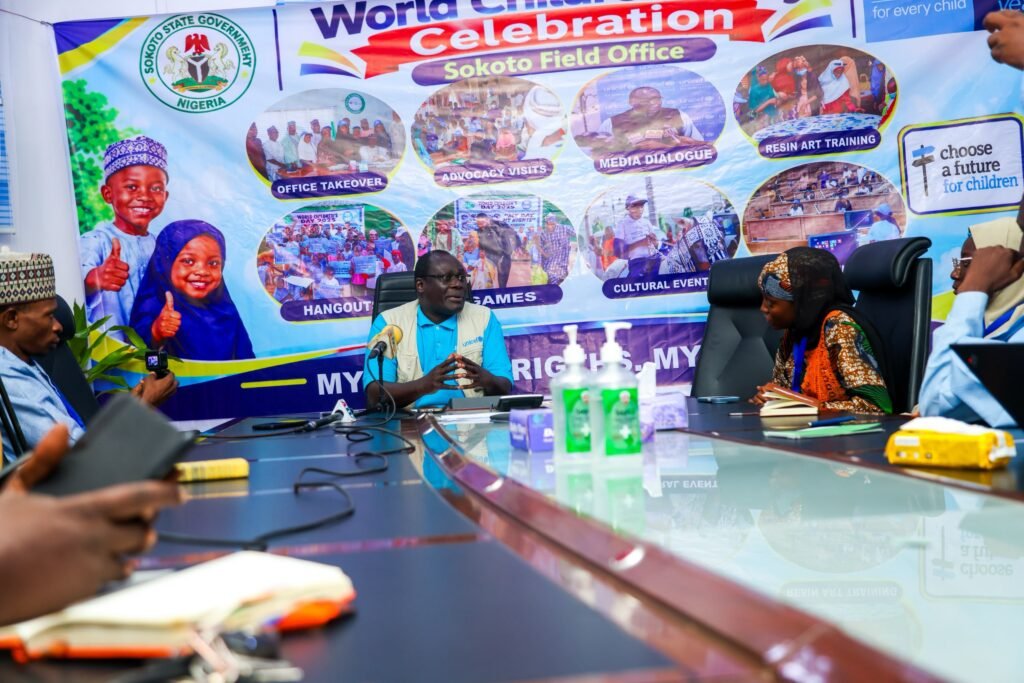
UNICEF Reaffirms Commitment to Child Rights As Sokoto Marks 2026 World Children’s Day 
From Bashir Rabe Mani in Sokoto
The United Nations Children’s Fund (UNICEF), Sokoto Field Office, has reaffirmed its commitment to protecting child rights and safeguarding the well-being of children across Sokoto, Kebbi and Zamfara States.
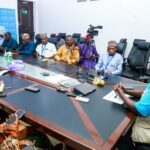
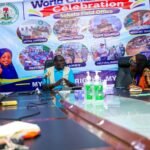
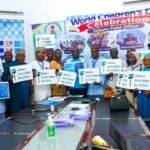
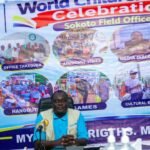
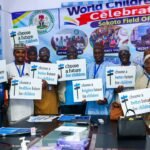
The Head of UNICEF, Sokoto Field Office, Dr. Michael Juma, stated this on Friday in Sokoto, while interacting with newsmen at a Media Dialogue organised as part of the commemoration of the 2026 World Children’s Day.
The theme for this year’s celebration is: “My Day, My Rights and My Future, That’s The Deal For 2026.”
Dr. Juma said the day is a reminder of the need to listen to children, understand their experiences and respect their rights. He explained that the UN Convention on the Rights of the Child is built on key principles, including the best interest of the child, non-discrimination, right to participation, and protection from violence and harm.
He called on the media to ensure fair and balanced coverage, by highlighting achievements made in realising the rights of children, as well as what can be done collectively to improve their welfare.
As UNICEF, he said, the organisation reconfirms its commitment to continue to protect child rights and safeguard the well-being of children, including ensuring that children are protected across different areas.
According to him, advancing child rights means ensuring that every child has access to quality and inclusive education, quality healthcare, nutrition, safe drinking water, and inclusive social development.
Dr. Juma listed several gains recorded over the years through UNICEF’s support to state governments in the three states. In the area of child protection and social policy, he said UNICEF supported the Sokoto State Government in developing the Child Protection Law, Family Court Rules on rehabilitation and reintegration of children, particularly those in conflict with the law, as well as the formulation of a Social Protection Policy at state level.
He added that UNICEF also supported the development of a Food and Nutrition Policy, focusing on both nutrition-sensitive and nutrition-specific interventions to address Moderate Acute Malnutrition and Severe Acute Malnutrition, which he described as critical to advancing child rights.
In the education sector, Dr. Juma said UNICEF supported the State Ministry of Education in identifying over 620,000 out-of-school children for re-enrollment into learning facilities. He further disclosed that over 98,000 children have benefited from the Teaching at the Right Level programme.
On the health front, he said UNICEF supported the state government to ensure that approximately 7.8 million children received Measles-Rubella vaccination, while about 5 million children under five were also vaccinated in the state. He noted that Kebbi State is among the first few states where malaria vaccination was piloted in Nigeria.
As we speak today, he said, over 148,000 children have been vaccinated for the first dose of malaria vaccine in Kebbi State, and approximately 130,000 children have been vaccinated against malaria for the second dose.
Dr. Juma explained that the malaria vaccine is given in four doses, to build strong immunity in children against childhood illnesses, adding that a healthy child can have better access to inclusive and quality education and better nutrition.
Responding to questions on education for children in Internally Displaced Persons camps, Dr. Juma said every child, irrespective of status, deserves access to quality education. He said UNICEF provides support through the State Ministry of Education.
This is to ensure that every child, whether in camp or host community, receives quality education. He listed interventions to include the Accelerated Basic Education Training programme for out-of-school children, a programme in Yabo Local Government Area, and support for Integrated Quranic Schools, particularly for out-of-school children.
He added that children in camps are also enrolled within host communities to access free education, while UNICEF is providing technical support for teacher professional development to enable teachers in host communities to provide quality education for all children, including IDPs.
For children in areas affected by insecurity, Dr. Juma said UNICEF is rolling out radio learning programmes, as well as promoting the Nigeria Learning Passport, where children at home with access to internet can continue learning and sit for examinations.
On the effect of reduced funding in the UN system on field operations, Dr. Juma said the decline in funding is a global phenomenon, not confined to Nigeria.
He said UNICEF has expanded the scope of resource mobilisation to get additional funding to support states in rolling out education programmes, adding that programming for education in the three states has not been impacted by the decline in funding experienced earlier in the year.
Dr. Juma stressed the need for a stronger coordination framework to ensure that services reach every intended child across different Local Government Areas and wards. He noted that although support exists, more effort is still required at LGA and ward levels, where the majority of children live.
He said success of programmes requires collective effort from government, development partners, Civil Society Organisations, community leaders, religious leaders and traditional leaders.
Citing the success of vaccination programmes, he said it was not only the effort of development partners and government, but also the key role played by traditional leaders, religious leaders, community leaders and parents who brought their children forward for vaccination.
He specifically called on the media to support in enlightening communities and generating demand for services across LGAs and wards.