SOKOTO MARKET FIRE DISASTERS: A RECURRING TRAGEDY
 SOKOTO MARKET FIRE DISASTERS: A RECURRING TRAGEDY
By Sani Umar
The recurring fire disasters at the Sokoto Central Market have become a disturbing phenomenon, as hardly a year passes without such an incident being recorded. While some people regard these incidents as unavoidable natural occurrences, others attribute them to negligence on the part of traders and business owners operating within the market environment.
Over the years, several reasons have been advanced as causes of the persistent outbreaks. In many cases, blame is either placed on electricity supply issues or linked to circumstances believed to be beyond human control.
However, the truth must also be traced to the conduct and attitude of individuals operating within the market. While the possibility of natural causes cannot be completely ruled out in the recurring cycle of market fire disasters, there is equally the issue of the excessive quest for profit among some businessmen and traders. It is a well-known fact that every society is governed by laws, rules, and moral standards meant to regulate human activities.
In societies like Sokoto, apart from conventional laws that guide citizens’ conduct, religious beliefs also play a significant role in shaping people’s behavior, relationships, and business dealings. Religious teachings are expected to influence not only personal conduct but also fairness, honesty, and moderation in commercial activities.
Unfortunately, many religious leaders and members of the public view these repeated fire incidents as consequences of greed and the desperate pursuit of wealth by all means. The manner in which some traders inflate prices of goods beyond reasonable limits is seen as contrary to societal values and religious teachings that promote justice, fairness, and compassion in business transactions.
Beyond the issue of pricing, there is also growing concern over the careless attitude of some traders toward safety regulations within the market. Many shop owners engage in unsafe electrical connections, overload power sources, and leave appliances or generators running without proper monitoring. In some cases, traders block access routes with goods and illegally erected stalls and structures, making it extremely difficult for emergency responders and fire service personnel to gain quick access whenever fire outbreaks occur.
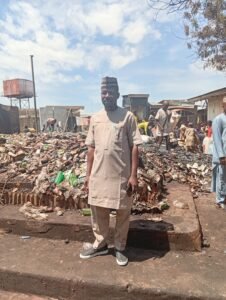
The problem of congestion within the market has equally worsened the situation. Open spaces and access roads meant for free movement and emergency operations have gradually been taken over by unauthorized structures and roadside stalls erected indiscriminately by traders in pursuit of more business space. This unhealthy development has not only distorted the original market layout but has also created serious safety hazards capable of aggravating the impact of fire disasters whenever they occur.
Sadly, the situation is not helped by the attitude of some market authorities who, despite claiming to be up and doing, have not done enough to enforce compliance with safety regulations and environmental standards within the market. The continued existence of illegal structures and overcrowded trading points reflects weak supervision and poor enforcement of established rules guiding market operations.
There is also the problem of poor maintenance culture and disregard for official warnings issued by relevant authorities. Instead of taking precautionary measures seriously, some traders often ignore safety instructions until disaster strikes. This attitude not only endangers their businesses and livelihoods but also threatens the lives and properties of innocent people operating within the market environment.
If the recurring fire disasters must be reduced to the barest minimum, traders, market authorities, and business owners must collectively embrace discipline, honesty, and responsibility in their daily activities. Government agencies can only provide regulations and emergency support, but lasting solutions will largely depend on strict adherence to safety standards, removal of illegal structures, decongestion of the market environment, and the willingness of all stakeholders to place public safety above personal gain and conduct their businesses with fear of God and consideration for others.
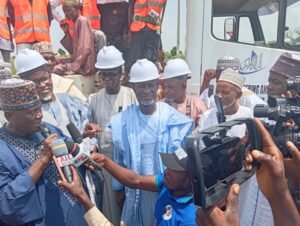
Despite the unfortunate incident, the government has remained compassionate and responsive by setting up a committee under the Acting Chairman, Barrister Ghandi Umar, mni, to verify the losses incurred by victims of the recent inferno with a view to providing support and compensation. The magnanimity of the administration of Governor Ahmed Aliyu is commendable and reflects a leadership committed to assisting citizens in times of distress.
The committee has gone round the affected areas, interacted with victims, assessed the extent of the damage, and taken inventory of the losses recorded. It is currently working on its report, which will soon be submitted to the government for necessary action.