Despite Soaring Costs, We Still Charge Lowest Private School Fees in Nigeria — Katukan Dange
Bashir Rabe September 25, 2026 0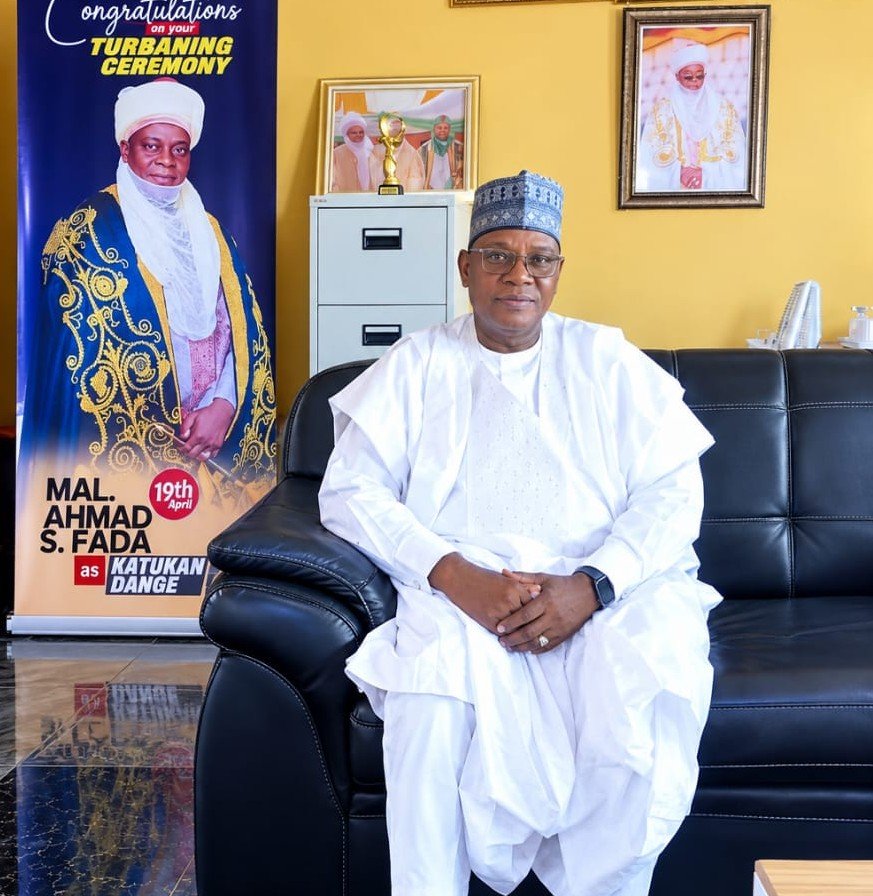
Despite Soaring Costs, We Still Charge Lowest Private School Fees in Nigeria — Katukan Dange

From Bashir Rabe Mani in Sokoto
The Sokoto State Chapter of the National Association of Proprietors of Private Schools (NAPPS), Alhaji Ahmed S/Fada, says it has kept private school fees in the state among the lowest in the country, even as operational costs have risen by over 500 per cent in recent years.
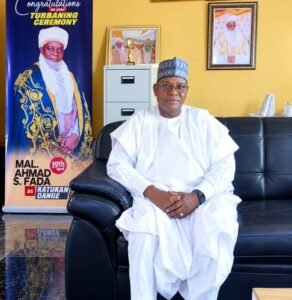
The State Chairman of the Association, the Katukan Dange and Barden Hausa, a retired Principal and foremost educationist, disclosed this in an exclusive interview in Sokoto on Friday.
The traditional title holder and veteran educationist said proprietors have deliberately chosen to absorb most of the shocks from fuel subsidy removal, inflation and naira devaluation to avoid overburdening parents.
“You can’t run a system at a hundred percent increase in costs across board. Now, what do you expect the private schools that is supposed to give quality education to do?
“To compromise on its standard without increasing the school fees? I dare say that Sokoto State is one of the few states that charge less school fees, as far as private school is concerned,” the Barden Hausa said.
“If you compare the charges in Sokoto State with other places, you will really appreciate the proprietors in Sokoto State.”
The Katukan Dange said private schools in Sokoto were established not purely for profit, but to complement government’s efforts at providing quality and affordable education.
“We know our shortcomings in Sokoto State. And the main aim of providing such schools, that is private schools, is to complement government efforts in providing quality and affordable education to our citizens, and we are aware of that mandate.
“That is why my association is doing everything possible to ensure that we take into consideration the economic situation of the parents,” Alhaji Ahmed S/Fada explained.
Giving an overview of the association’s footprint, the retired Principal disclosed that the association currently has 384 fully registered private schools in Sokoto State that have met the minimum standards for establishment.
“From Primary One to SS3 alone, excluding nursery and crèche sections, we have over 100,000 enrollment as at now.
“And we have more than 10,000 staff in our schools – teachers and supporting staff like school sergeants, cashiers, lab attendants, school drivers and many others,” he said.
Alhaji Ahmed S/Fada argued that besides the State Government, no other organization in Sokoto State provides as much gainful employment as NAPPS.
The foremost educationist further highlighted the socio-economic contribution of private schools to the local economy, describing the schools as hubs of economic activities.
“If you go outside our schools during breakfast and after school hours, you will see all sorts of vendors: food sellers, drinks, stationery sellers.
” They are all there making a lot of money out of our schools. Practically, whatever money the school is generating goes back to the community,” the Barden Hausa said.
Responding to complaints that some private schools charge high fees but offer questionable quality, the Katukan Dange rejected the claim, saying the association has an internal regulatory mechanism.
“I don’t want to agree with that assertion. Even when the hike in petroleum products was introduced, I called a meeting and we all agreed that the highest a proprietor can increase in Sokoto State is 15 to 20 percent at that point, not annually.
” Until today, many schools have not increased,” he stated.
Alhaji Ahmed S/Fada who is also the Director of Sahaba Academy in Sokoto, stressed that his own schools have not increased fees in the last two to three years despite soaring costs.
“A set of students’ furniture, three-seater that we used to buy at 6,000 Naira is today 40,000 Naira.
“The cost of textbooks that we used to buy at N350 Naira is now N7,000, N8,000, with an additional N700 increase this session alone.
” We have not asked parents to pay for it,” he added.