FG Sustains Nationwide Offensive Against Banditry, Illicit Arms As NSA Ribadu Unveils 5-Point Strategy For Sokoto
Bashir Rabe October 17, 2026 0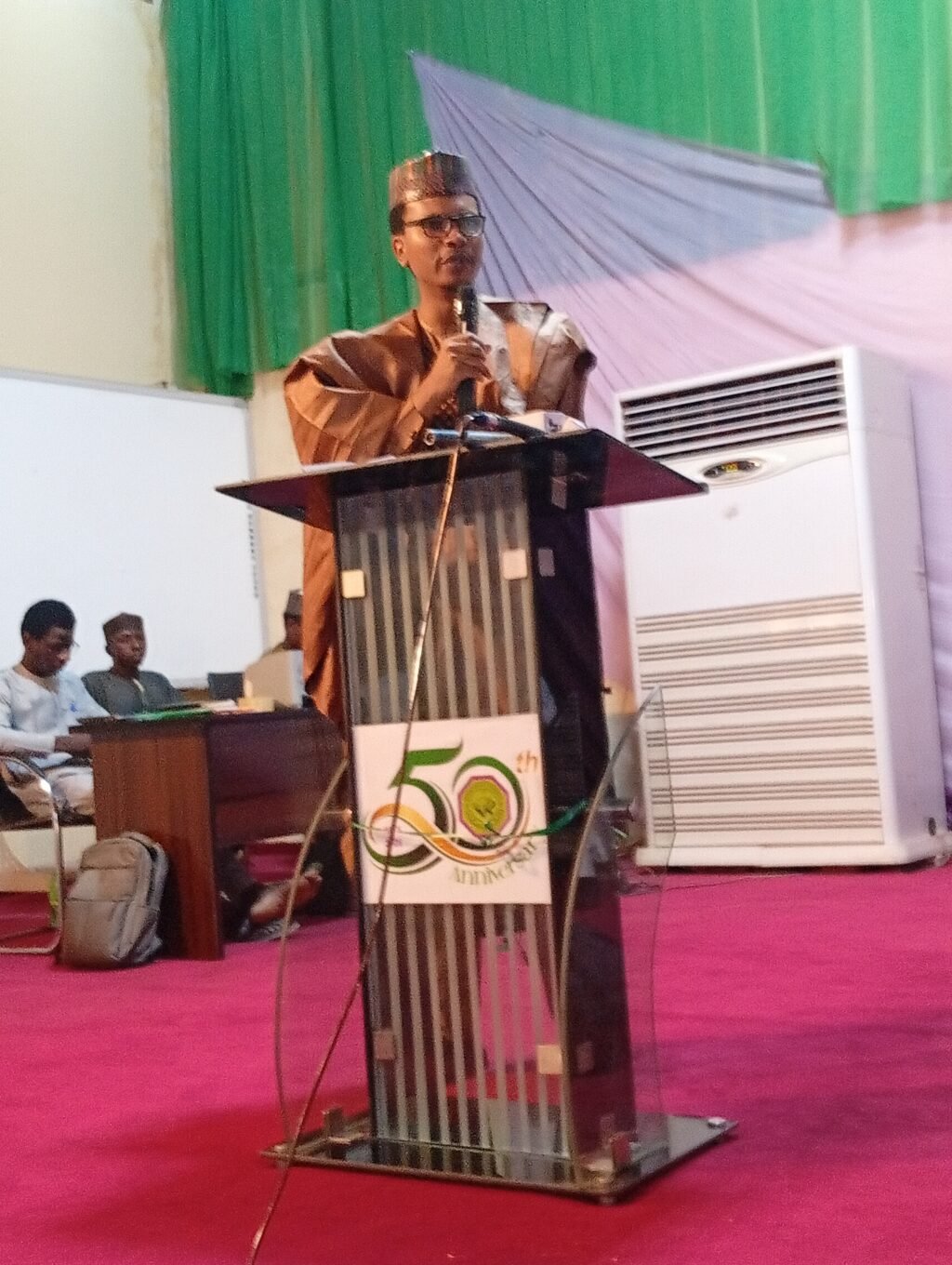
FG Sustains Nationwide Offensive Against Banditry, Illicit Arms As NSA Ribadu Unveils 5-Point Strategy For Sokoto




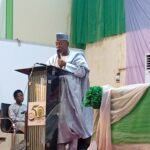
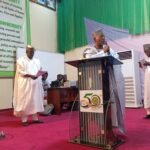





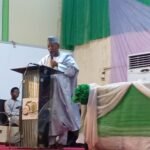


From Bashir Rabe Mani, Sokoto
The Federal Government has restated its resolve to sustain nationwide security operations against banditry, terrorism and illicit arms trafficking, with the National Security Adviser (NSA), Mallam Nuhu Ribadu, unveiling a five-point strategic plan to restore peace and community resilience in Sokoto State and the North-West.
Ribadu stated this on Saturday in Sokoto in his keynote address at a one-day Brainstorming Session on Coping with Insecurity in Sokoto State, with the theme: “Coping with Banditry in Sokoto State: A Multi-Stakeholder Dialogue for Prevention, Containment and Community Resilience.”
The epochal dialogue was organized by the Sokoto Advancement Forum (SAF), in collaboration with the Centre for Peace Studies, Usmanu Danfodiyo University, Sokoto (UDUS), and held at the Emir Zayyanu Abdullahi Auditorium, UDUS.
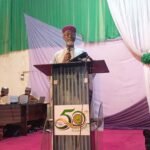
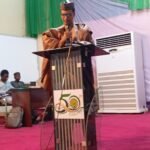
Ribadu, who was represented by the Director of Legal Services, Office of the National Security Adviser (ONSA), Barrister Zakari Usman Mijinyawa, said under President Bola Ahmed Tinubu, the Federal Government is strengthening military operations, intelligence gathering, law enforcement, border security and inter-agency cooperation to disrupt criminal networks nationwide.
He said the national framework for the effort is being driven by the National Crisis Management Doctrine (NCMD) being advanced by ONSA to ensure a coordinated whole-of-government and whole-of-society approach.
Giving a national scorecard on arms control, the NSA disclosed that the National Centre for the Control of Small Arms and Light Weapons (NCCSALW) recovered 5,449 firearms and destroyed 1,419 illicit weapons in recent nationwide operations, with cumulative destruction since 2022 exceeding 19,000 weapons.
He said the figures demonstrate the importance of sustained weapons-control operations and that the NCCSALW and relevant security agencies will continue to strengthen efforts to disrupt arms-trafficking networks, trace recovered weapons and prevent illicit firearms from reaching criminal groups in Sokoto and other vulnerable areas.
He said Operation FANSAN YAMMA remains an important national framework for coordinating security operations across the North-West, adding that the Federal Government will continue to strengthen it through improved intelligence-sharing, logistics and cooperation among security agencies, state governments and local communities.
Ribadu noted that banditry in Sokoto has evolved beyond cattle rustling and kidnapping into a complex national security threat with transnational dimension, citing the emergence of Lakurawa, designated by the Federal Government as a terrorist group, with links to Sahelian extremist networks along the Nigeria-Niger border.
According to him, insecurity now affects every aspect of national life, from food security as farms are abandoned, to trade as markets are disrupted, to education as schools are attacked, recalling the killing of the Emir of Gobir in 2024 as a painful reminder of the threat to traditional institutions and social cohesion.
On the way forward, Ribadu listed five practical priorities for Sokoto that align with the national security strategy, which include sustaining intelligence-led operations around vulnerable settlements, forest corridors and border communities, complemented by State Forest Guards and NSCDC Agro-Rangers, and strengthening cross-border intelligence-sharing with regional partners to deny criminal groups safe havens.
He also listed strengthening information-sharing among armed forces, intelligence agencies, police and civil defence, and building early-warning arrangements linking local governments, traditional rulers and communities in hotspots like Sabon Birni, Isa, Tangaza and Goronyo, to improve intelligence and early warning.
He further listed building community trust and countering extremist narratives by engaging traditional rulers, religious scholars, women and youth groups to prevent exploitation of grievances, countering misinformation and ethnic hostility, while upholding professional standards, impartial law enforcement and human rights.
The fourth priority, he said, is restoring agriculture and rural livelihoods by protecting priority farming areas, rural routes, markets, schools and health facilities, with security planning reflecting agricultural calendars and supporting safe, voluntary returns of displaced families.
The fifth priority, according to him, is preventing recruitment and supporting lawful reintegration by expanding education, skills and livelihood opportunities to prevent recruitment, while ensuring any disarmament, demobilisation and reintegration complies with the Terrorism (Prevention and Prohibition) Act, 2022, with appropriate screening and accountability, stressing that reintegration must never replace justice or reward violence.
He challenged participants to produce four concrete deliverables: a community security and early-warning plan, a livelihood protection and recovery plan, a community partnership and accountability framework, and an implementation matrix with responsible institutions, timelines and measurable indicators.
He said the people of Sokoto do not measure security by the number of meetings held or the eloquence of speeches, but by whether a mother can sleep without fear, a farmer can harvest without paying an unlawful levy, a trader can travel safely and a child can attend school without the threat of abduction.
In his opening remarks, Chairman of the occasion and Chairman of SAF, Amb. Prof. Mohammad Ahmad Wali, placed Sokoto’s crisis within the national security emergency declared by the Federal Government in November 2025, which raised police recruitment to 50,000 officers and ordered more Army recruitment.
Prof. Wali, a former senior security coordinator in Sokoto in the 1980s when Sokoto was one of the most peaceful states, said attacks have now been recorded in 21 of 23 LGAs in Sokoto, with over 1,100 people kidnapped in the twelve months to June 2026, second highest nationally after Zamfara.
He cited the August 2026 attack in Tsamaye, Sabon Birni, where at least 21 people were killed and 37 kidnapped, warning that armed gangs now control territory and force villagers to pay “tax” while extremist groups like Lakurawa exploit porous borders.
He commended both federal and state responses, including Operation Fansan Yamma, the State’s Community Guard Corps of over 2,500 guards with 40 Hilux vans and 700 motorcycles, the N27.6 billion security equipment commissioned in July by the Minister of Defence, and the Northern Nigeria Security Trust Fund established by the 19 northern governors and championed by His Eminence the Sultan of Sokoto.
Similarly, Vice Chairman of SAF, Prof. Riskuwa Arabu Shehu, said nationally, SBM Intelligence documented at least 4,722 abductions in 997 incidents between July 2024 and June 2025, with 762 killed, N48 billion demanded in ransom and N2.57 billion collected, with North-West accounting for over 60 percent of kidnapping incidents.
He said over 580,000 people, mostly women and children, have been displaced across Katsina, Sokoto and Zamfara as of February 2025, with entire wards emptied in Sabon Birni.
He warned that the Lakurawa group signals a dangerous convergence of profit-driven banditry and ideological insurgency in Nigeria’s North-West.
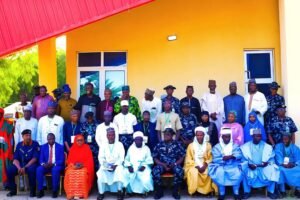
The session drew the Chairman of the occasion, Malam Yahaya Abdulkarim, OON, mni, Sarkin Rafin Sokoto, VC UDUS Prof. Bashir Garba, Wazirin Sokoto Prof. Sambo Wali Junaidu, GOC 8 Division represented by the Garrison Commander, security chiefs, commissioners, traditional rulers, scholars and civil society groups, who resolved that SAF will transmit recommendations to government and security agencies for implementation.
The Vice-Chancellor, Usmanu Danfodiyo University, Sokoto, Prof. Bashir Garba, represented by Dr Kudirat Abiol, the University’s Librarian, said that the institution was hugely committed to the conduct of quality research, among other plausible measures, to stem the tide of the menace of insecurity in Sokoto state and Nigeria in general.
According to Prof. Bashir Garba, peace and security cannot be achieved only through kinetic measures, applauding the forum for convening the historic event