Sokoto residents rejoice as state govt unveils multi billion Naira projects — By Bashir Rabe Mani
Sokoto residents rejoice as state govt unveils multi billion Naira projects — By Bashir Rabe Mani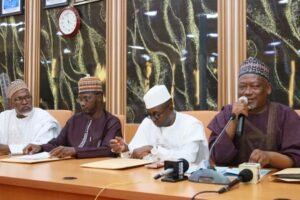
Democracy is a system of government in which political power rests with the people. It can be exercised directly by citizens voting on issues themselves, or more commonly through representatives elected in free and fair elections.
The core idea is popular sovereignty: authority comes from the consent of the governed, and leaders are accountable to them.
Beyond elections, a functioning democracy relies on political equality, rule of law, and protection of basic rights like free speech, assembly, and a free press. These checks ensure that majority rule doesn’t override individual liberties and that power can change hands peacefully when citizens choose.
For democracy to take root in Nigeria, it must deliver tangible improvements in people’s daily lives, with reducing poverty, cutting unemployment, and meeting the social needs of the electorate as central imperatives.
When government uses democratic institutions to create jobs, expand access to education, healthcare, and basic infrastructure, and ensure public resources are spent transparently, citizens see the system as responsive rather than extractive.
That link between political participation and material well-being strengthens trust in democratic norms, reduces the appeal of patronage and extremism, and makes free elections meaningful beyond the ballot box.
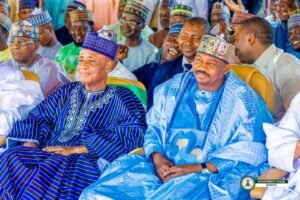
Interestingly, excitement swept through Sokoto metropolis on Wednesday, May 13, 2026, as the state government unveiled a series of multi-billion Naira projects following approval by the State Executive Council.
The Council approved the release of funds for the immediate commencement of the projects, which span infrastructure, healthcare, and education across the state.
Officials say the initiative is aimed at improving living standards, creating jobs, and boosting local economic activity.
The elated residents described the move as “long overdue” and a clear sign of the government’s commitment to delivering tangible dividends of democracy.
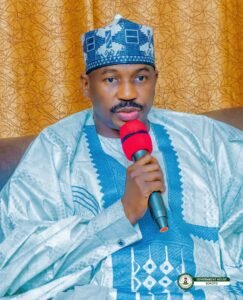
Gov. Ahmed Aliyu Sokoto said the investments reflected the administration’s focus on meeting the needs of Sokoto people in line with his people-centric 9-Point Smart Agenda.
He urged the communities to take ownership of the facilities to ensure that they are maintained and adequately protected.
The various beneficiaries expressed optimism that the projects would ease their daily challenges, particularly in transport, healthcare access, and education, among a myriad of other revolutionary infrastructure projects.
In the above direction, the Sokoto State Executive Council on Wednesday approved the purchase of six new vehicles for the Office of the Governor at the cost of about N1.47billion.
Briefing newsmen shortly after the conclusion of the meeting at Government House, the Commissioner of Transport, Alhaji Bala Kokani, listed the vehicles to include three Land Cruisers, two Prado Jeeps 2025 and one Coaster bus.
According to him, the council has also approved the procurement of two pay loaders for the Ministry of Environment to augment the extant vehicles used for the collection of solid wastes in Sokoto metropolis and its environs at the cost of over N340.5million.
He added that the council has approved the purchase of six new buses for the State Transport Authority (SSTA) at the cost of about N438million, explaining that it was out of the N500 million the agency had generated as revenue.
Also speaking, the Commissioner of Finance, Engr. Muhammad Jabbi Shagari, the council has approved the renovation of the International Conference Centre, Kasarawa, damaged by windstorm and rainstorm, Kasarawa, at the cost of N733.27million.
Also addressing newsmen, the Commissioners of Youths and Sports, Engr. Mustapha Kofar-Marke, disclosed that the council has approved over N1.079billion for the renovation of the Permanent Orientation Camp, Wamakko.
He stated that the camp, built by the administration of the former Governor of the state, Sen. Aliyu Magatakarda Wamakko over twelve years ago, has never been given any facelift.
Engr. Kofar-Marke listed some of the structures to be renovated to include hostels, halls and offices, among others.
He also said that the council has approved the printing of 2026 Calendars and Dairies, at N67.94million and N71.218million, respectively.
The Commissioner for Lands and Housing, Barrister Nasiru Aliyu Dantsoho, said that the council has approved the general renovation of 36 newly developed roads in Sokoto city and its environs at the cost of about N2.2billion
Dantsoho further disclosed that the council has approved the execution of additional repair works at the Protocol Lounge of the Sultan Abubakar III International Airport, Sokoto, at the cost of over N894.67millipn.
He added that the council has approved the general fencing of the Livestock Services Centre, Wamakko, at the cost about N398.64million.
It could also be happily recalled that the Sokoto State Executive Council under the Chairmanship of Gov. Ahmed Aliyu Sokoto had on Thursday, April 16,2026, held its inaugural 2026 meeting,where it approved a myriad of multimillion Naira projects.
Briefing newsmen shortly after the meeting, the Commissioner for Higher Education, Prof. Isa Maishanu, said that the council has approved of a N336.58million project for the renovation of the residence of the Vice-Chancellor of the State University, Sokoto.
He added that the contact also entailed the renovation of five blocks of staff quarters at the same University.
According to him, the council has also approved the upgrading of the Clinic at the State College of Basic and Remedial Studies, Sokoto to a Primary Healthcare Centre (PHC), at the cost of N179.36million.
Maishanu explained that the project was part of the requirements of the National Board For Technical Education (NBTE), before the upgrading of the school to a Diploma awarding institution.
The Commissioner further said that the council has approved the renovation of Turaki Basic Secondary School, Sokoto, at the cost of over N424million
Maishanu also disclosed that the council has approved the renovation of facilities where the proposed Centre for out-of-school children is to be established at the Gandu Area in Sokoto at the cost of about N532.6milllion.
Also speaking, the Commissioner of Information and Orientation, Alhaji Sambo Bello Danchadi, said that the council has approved the general repairs of six Mitsubishi Canters belonging to the State Transport Authority, at the cost of about N78.34 million.
Similarly, he disclosed that N221.9milion has been approved for the completion of the Wamakko General Hospital, recalling that it was started in 2013.
He, however, recalled that the project was stalled and it was thereafter revoked by the immediate past administration in the state.
The Commissioner for Religious Affairs, Prof. Jabir Sani Maihula, also stated that the council has approved the renovation of the Jumu’at Mosque in Shuni town, Dange-Shuni Local Government Area of the state at the cost of N144.55million
According to him, the council has further a N69.89million contract for the rehabilitation of a five-daily prayer Mosque at the State Headquarters of the Nigeria Security and Civil Defence Corps (NSCDC).
Also speaking, the Commissioner for Innovation and Digital Economy, Alhaji Bashir Umarun-Kwabo, disclosed that the council has approved the establishment of a security outpost at the Mabera, Kantin Sani Area, Sokoto metropolis, at the cost of N126.15million.
Similarly, he stated that the council has approved a N141.98million contract for the fencing of a Mechanical Workshop at Gwadabawa town, Headquarters of Gwadabawa Local Government Area, to bolster agricultural activities as well as further guarantee food security.
Conclusively, in Sokoto State, the APC-led administration of Gov. Ahmed Aliyu is anchoring democracy on these same imperatives.
Through data-driven social protection, mass skills training for youths and women, expanded healthcare and water supply, and heavy investment in education and housing, the government is turning democratic participation into measurable improvements in living standards.
If sustained, this approach shows how democracy in Nigeria can move beyond elections to become a promise of poverty reduction, jobs, and social welfare delivered to the electorate.
Mani is the Sokoto State Correspondent of People’s Daily Newspaper and the Publisher:
www.globalnewsguru.ng