Niger State executes landmark road projects across three Zones – New Niger Dev’t Project Chairman

Niger State executes landmark road projects across three Zones – New Niger Dev’t Project Chairman






By Mohammed Baba Busu
The Niger State Government says it is implementing several landmark road infrastructure projects across the state’s three development zones to improve connectivity, stimulate economic activities and bridge the existing infrastructure deficit.
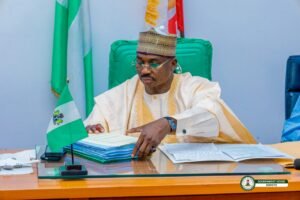
The Chairman of the New Niger Development Project, Alhaji Abubakar Mustapha-Bida, disclosed this in the continuation of an interview on the achievements, strategic direction and infrastructure development agenda of Gov. Umaru-Bago APC-led the present administration.
Mustapha-Bida said some of the major projects included the Minna–Bida Road, Bida Ring Road, township road expansion projects, flyovers and interchanges in Minna, as well as strategic inter-state and cross-border roads in Zone C.
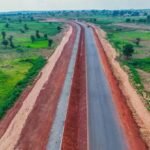
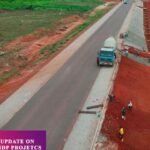
He said the 84-kilometre Minna–Bida Road had reached approximately 70 per cent completion, describing it as one of the administration’s landmark infrastructure projects.
According to him, the road project, which had remained uncompleted through two previous administrations, was revived following the present administration’s decision to secure international development financing from the Islamic Development Bank and Abu Dhabi Fund for Development.
He explained that although the administrations of former Governors Abdulkadir Kure and Abubakar Sani Bello had made considerable efforts towards the project, funding and other considerations delayed its completion.
“When we assumed office, the project had reached approximately 80 per cent of the required preparatory stage. Within six months, the present administration completed the outstanding 20 per cent and took a decisive step towards implementation.
“Ordinarily, such a process could have taken about two years, but with the institutional capacity and expertise provided through the New Niger initiative, we were able to close the gap within six months,” he said.
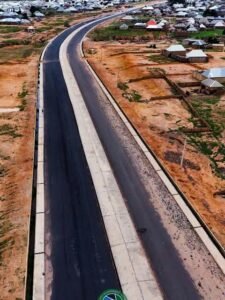
The chairman said the administration had also commenced the construction of five kilometres of roads in each of the state’s 25 local government areas as part of efforts to ensure equitable infrastructure distribution.
He disclosed that the Bida Ring Road, whose concept dated back to the town’s 1980 development plan, was now over 50 per cent completion.
He added that approximately 22 kilometres of dual-carriageway township roads were also under construction in Bida, with more than half of the work completed.
On projects in Zone B, Mustapha-Bida said Minna, the state capital, had approximately six flyover and interchange projects under construction at different locations, describing the development as unprecedented in the history of the state.
He identified the Minna City Gate interchange and Kpakungu interchange as some of the major projects, adding that the former was expected to be commissioned around December.
He said interchanges were also being constructed at both ends of the Minna–Bida Road to enhance traffic flow and connectivity between the two major towns.
According to him, the City Centre Road, also known as Road One, which begins from Chanchaga towards Maikunkele, is progressing, with plans to extend it to Beji, where a new city gate will be established.
He said the government also planned to extend the dual carriageway from Chanchaga towards Jazu, with another city gate proposed in that direction as part of the broader urban development plan for Minna.
In Suleja, the chairman said the government was undertaking major township road expansion projects, including plans for more than 20 kilometres of dual carriageways.
He, however, explained that compensation-related challenges had delayed the commencement of some sections of the project, adding that efforts were ongoing to resolve the issues and enable construction to proceed.
Mustapha-Bida further disclosed that the administration had completed the over 30-kilometre Paiko–Lapai Road, describing it as another significant intervention in the state’s road infrastructure development.
On Zone C, he said the government was implementing several strategic projects in Kontagora and other parts of the zone to enhance transportation, trade and regional economic integration.
He identified the Kontagora Ring Road, which connects the eastern and western parts of the town, as one of the major projects, expressing optimism that it would be completed before the end of the administration.
He said the government hoped to commission at least one section of the bypass within the administration’s tenure.
The chairman added that the Kontagora Township Road Project, covering approximately 5.5 kilometres of dual carriageway in the town’s city centre, had achieved about 30 per cent completion within six months of commencement.
He expressed optimism that at least one carriageway would be delivered before the end of the administration.
Mustapha-Bida also described the Kontagora–Rijau Road as a strategic economic corridor, saying the state government had intervened on approximately 90 kilometres of the road, which had reportedly received no significant intervention since the era of the Petroleum Trust Fund (PTF) under the late Gen. Sani Abacha’s administration.
He said the project had achieved more than 60 per cent completion, noting that its strategic importance extended beyond Niger State to neighbouring economic corridors and the Central African sub-region.
He also listed the Agwara–Borgu Road, which connects Agwara and Borgu through Babanna towards the Republic of Benin, as another important project being undertaken by the state government.
According to him, the road will facilitate cross-border trade, improve access to markets and strengthen economic relations between communities in Niger State and neighbouring countries.
“We understand that economic development is not limited to activities within the boundaries of Niger State. It also depends on our connections with neighbouring states and countries.
“Our intention is to open up these economic corridors, strengthen trade connections and create opportunities for increased commercial activities,” he said.
The chairman, however, disclosed that security challenges along some sections of the Kontagora–Rijau and Agwara–Borgu roads had compelled the government to temporarily suspend construction activities in affected areas.
He said the decision was taken to safeguard contractors, construction workers and other personnel until the security situation improved.
Mustapha-Bida reiterated the government’s commitment to delivering critical infrastructure across the three development zones, saying the projects were designed to improve transportation, expand economic opportunities and accelerate the overall development of Niger State.
He added that the New Niger Development Project was providing institutional support in project preparation, implementation capacity and quality assurance to ensure effective delivery of the administration’s development agenda.