
Catholic Caritas Foundation urges FG to declare banditry a humanitarian emergency
From Bashir Rabe Mani in Sokoto
Caritas Nigeria also known as Catholic Caritas Foundation of Nigeria has urged the Federal Government should to declare banditry a humanitarian
emergency.
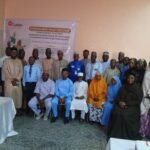
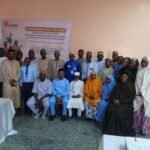
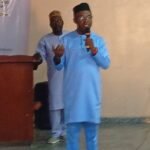
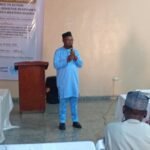
Our Correspondent in Sokoto reports that this call was made on Thursday in Sokoto by Mr Jude Akwo, Programme Officer, Good Governance, Caritas Nigeria.
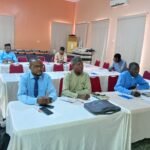
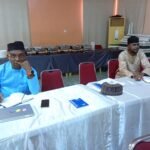
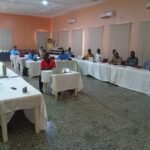
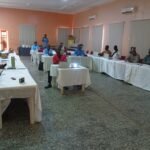
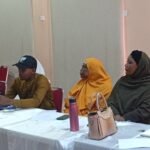
Our Correspondent further reports that he spoke at a one-day ‘Stakeholders’ Policy Dialogue and Research Dissemination Workshop.”
It was themed, ‘Building Community Resilience Through Women’s Roles in Conflict Prevention and Mediation in North-Western Nigeria: Sokoto, Kebbi and Zamfara States.’
He said, “In doing so, they will be able to call the federal attention to the system
and then other international humanitarian agencies for them to be have organized and a formal IDP camps.
“The IDP camps are not formal. They are informal. And there are also secondary abuse, even in the IDPs.
“Women are raped in the IDP camps because the IDP camps don’t have fences.They live in makeshift, incomplete buildings living.
“And so, if government can think that they don’t have the needed resources to be able to intervene in terms of putting them in IDP camps, they should first of all agree that there is a humanitarian emergency in their states as a result of banditry and terrorism.
*So that what is happening in the Northeast can be replicated in the North-West and then response should be more organized, should be more strategic and all of that.”
According to Akwo, .the foundation is a conglomerate of Caritas across the world, under Caritas Internationalis, adding, “our headquarters is in the Vatican, in Rome.
“We are a Catholic agency that deals with the development and humanitarian intervention in Nigeria.
” This project is part of our Good
Governance unit, where we deal with peace building, civic participation, civic engagement, and then collaboration between citizens and governments.
“And we also have a platform where
we do parliamentary liaison. We also have a parliamentary liaison office under this thematic area. And all of us, we are under the Catholic Secretariat of Nigeria.”
The Project Manager also stated that the crux of the workshop was to assess women agencies in conflict in the North West.
He added, “Basically, the conflict situation in the North-West is banditry and other forms of terrorism, how it affects women and how women have responded to the situation over time.
“We try to say that we go beyond just the female victimhood. We find that women have done more than just being victim in the conflict.
“They have also engaged in early warning and early response mechanisms.
They’ve dealt with that.
“They’ve also designed an agency where they respond to the conflict,
like what they have been doing.
“They commune to take care of other kids, their parents who have been kidnapped.
“They also have ways to do the phone tree, where they are allowed..They have also taken part in negotiations.
“And the idea of the project is for government to also look at them as an agency in the response. Look at the gender response to dealing with the issue
response of banditry in North-Western Nigeria.”
Akwo further noted that women have played roles in intervening, adding, “one of the roles they’ve played is that the community they’ve built around taking care of survivors.
“Then they’ve also contributed like a village loan savings where they keep
subventions to contribute to even pay bandits.
“So, those are some of the findings.
And in the overall, they can be key in suing for solutions through the conflict and then management of affairs.
“We also also look at them to drive out solutions to deal with the crisis.”
On ensuring transparency in security spendings, Akwo urged that the CSOs should start having regular engagements with.the security organizations.
He advised, “The CSOs should make platforms like this where they can talk and security agencies should speak.
Who are the key security agencies in this business?
“The police, the military, the DSS, and the drug law enforcement agencies. Put them together. Let us speak. Let us talk to them.”
